Tell me who the piece is for
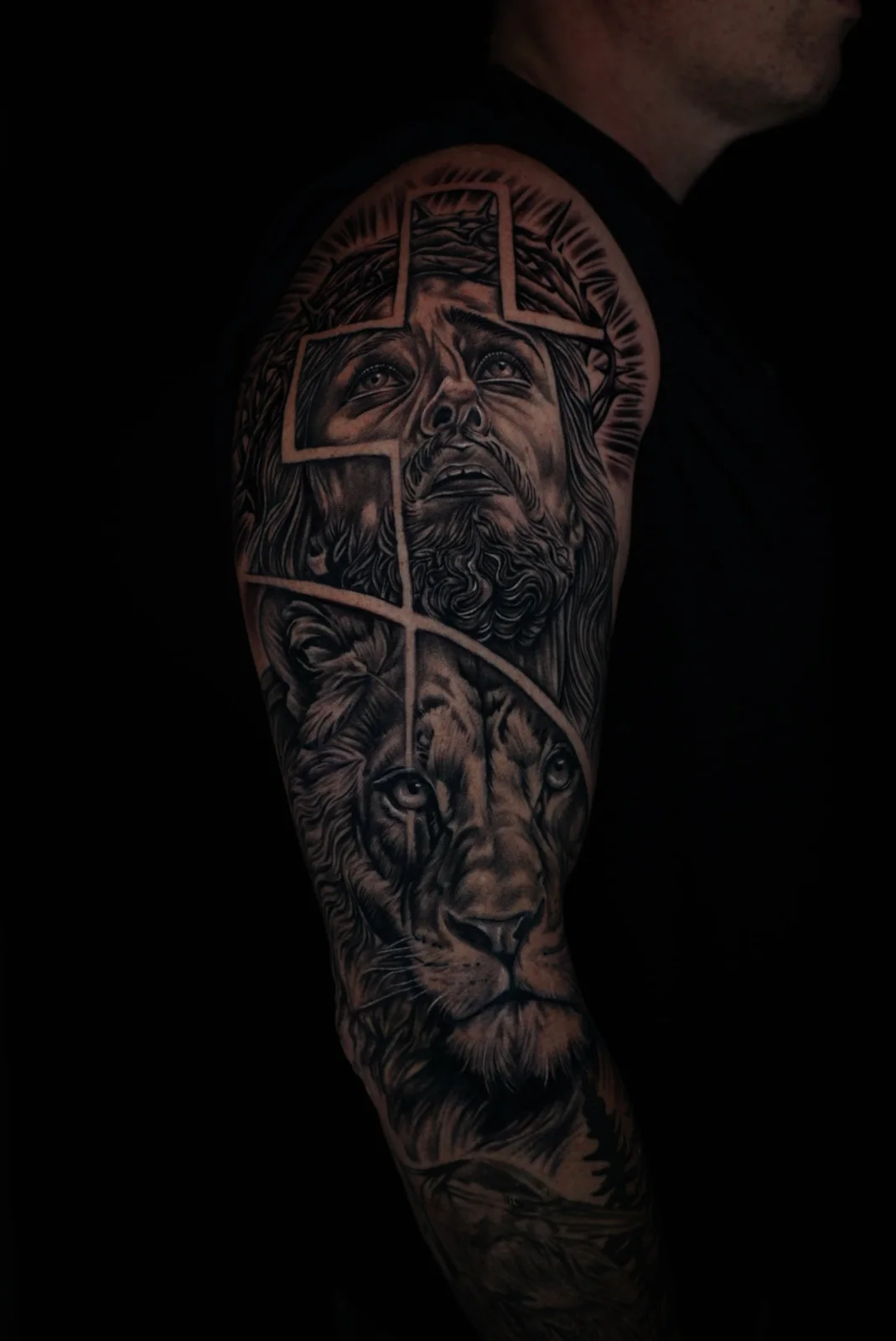
Memorial work carries a different kind of responsibility. I appreciate every client who trusts me with a piece connected to someone they love. The most helpful place to start is the story: who the person was, what you remember, and what you want to carry with you.
You do not have to turn that whole story into a list of symbols. The consultation is where we identify the details that feel true and can also work together as a tattoo.
Choose references with care
For portrait work, use the clearest original photograph you can find. Good lighting, visible facial features, and enough resolution give us a better starting point. Screenshots of compressed social media images may lose details that matter.
Other references can include handwriting, a personal object, a flower, a place, a date, or imagery connected to faith and memory. Tell me why each element matters so the composition is built around meaning instead of decoration.
Give the important details room
Trying to include every memory in one piece can make the final tattoo harder to read. A strong memorial design usually lets the most important subject lead and uses the other elements to support it.
Placement and size matter here. Faces, handwriting, and small details need enough room to remain clear. During consultation, we can talk honestly about what fits the placement and what may need to be simplified, enlarged, or saved for another piece.
Your connection is the direction
There is no single correct way to remember someone. Some clients want a recognizable portrait. Others want something only their family would understand. Both can be powerful when the piece is honest.
Bring what you have and tell me what matters. I will help you work through the visual direction, scale, and placement so the tattoo feels personal to you.