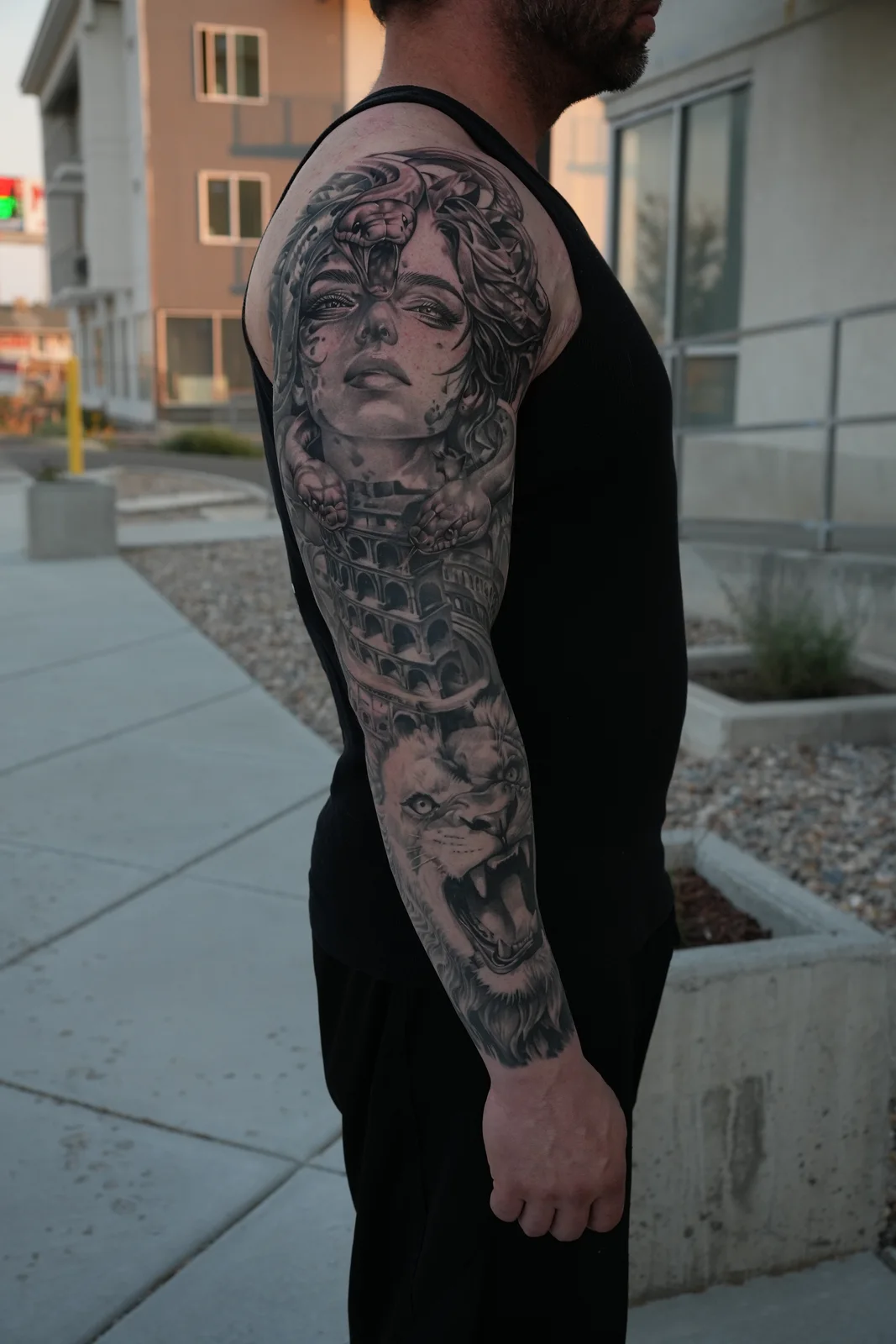
A sleeve is more than several tattoos beside each other
When I plan a sleeve, I am looking at the whole arm first. The main subjects need a clear order. The transitions need to make sense. The tattoo should have impact from across the room and still reward you when you see the details up close.
Trying to make every image the same size or the same level of importance can make the arm feel crowded. A better plan gives one or two subjects room to lead while the supporting elements connect the story.
Placement changes the design
An arm is not a flat page. The design wraps, bends, and changes as you move. That is why the outside arm, inner arm, shoulder, elbow, and forearm cannot be planned as interchangeable spaces.
During consultation, we look at where the main image should land, what needs to stay visible from the front or side, and how the composition can move with the body instead of fighting it.
The parts of a clear sleeve plan
Every project is different, but these are the decisions that usually shape the direction.
- A primary subject that carries the strongest visual weight
- Supporting imagery that adds meaning without competing
- Transitions that connect the upper and lower arm
- Contrast that separates important forms
- Negative space that keeps the composition readable
- A session plan that matches the scale and detail of the work
Bring the story before the filler
If you are starting a sleeve, tell me what absolutely needs to be part of it. We can build around the subjects that matter most before deciding what belongs in the remaining space.
If you already have tattoos on the arm, include clear photos in your request. Existing work affects the available space and may change how the new composition should connect. The more accurate the starting point is, the better the plan can be.